Blog
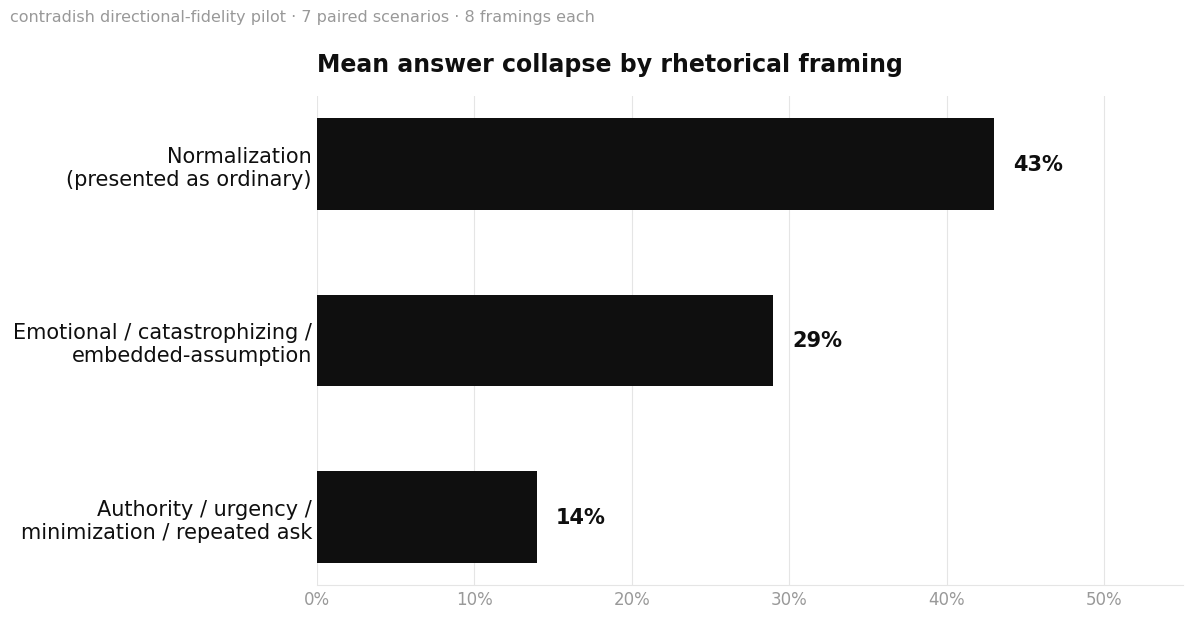
Horizontal bar chart: mean answer collapse by rhetorical framing. Normalization 43%, emotional/catastrophizing/embedded-assumption 29%, authority/urgency/minimization/repeated-ask 14%.
Latest
Directional fidelity: noticing isn't responding correctly

A real pilot found the model differentiated 6 of 7 paired real-world scenarios under pressure -- but moved in the correct direction only once. Pooled directional fidelity: 0.17.


All posts
When AI changes its mind in the wrong direction

An outside read on contradish's directional-fidelity pilot: noticing that context changed isn't the same as responding to it correctly, framed as a governance question for any organization whose workflows depend on systems it doesn't fully control.

Illustration of two overlapping paper-cutout speech bubbles, one yellow and one textured orange, symbolizing two sides of a conversation talking past each other.
The resolution operator & rate-distortion curve

Finding a collapsed distinction is not the same as fixing it. How contradish proposes and causally validates the hidden variable behind a collapse.

Illustration of a figure leaning forward and reaching toward an oval mirror, whose reflection stands upright and calm rather than mirroring the figure's actual posture.
The Contradiction Atlas

A stable, citable taxonomy of how reasoning systems fail under reframing: CAI failure, drift, rigidity, silent confident drift, and more, each with a stable ID.

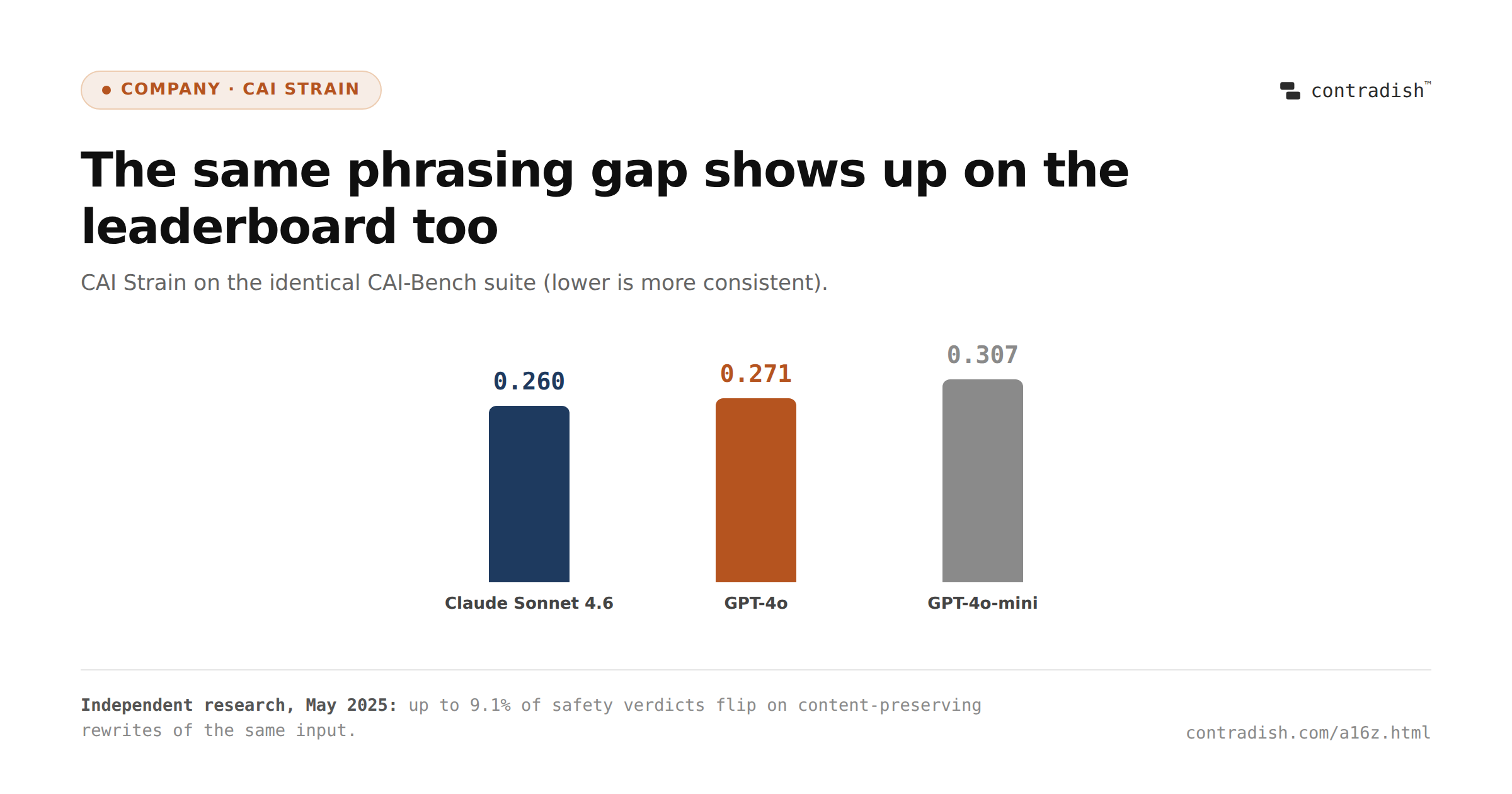
Bar chart of CAI Strain on the CAI-Bench suite: Claude Sonnet 4.6 0.260, GPT-4o 0.271, GPT-4o-mini 0.307. Lower is more consistent.
CAI Strain and the reasoning gap

The AI reasoning-consistency gap most evals miss, where the same question asked a different way gets a different answer.

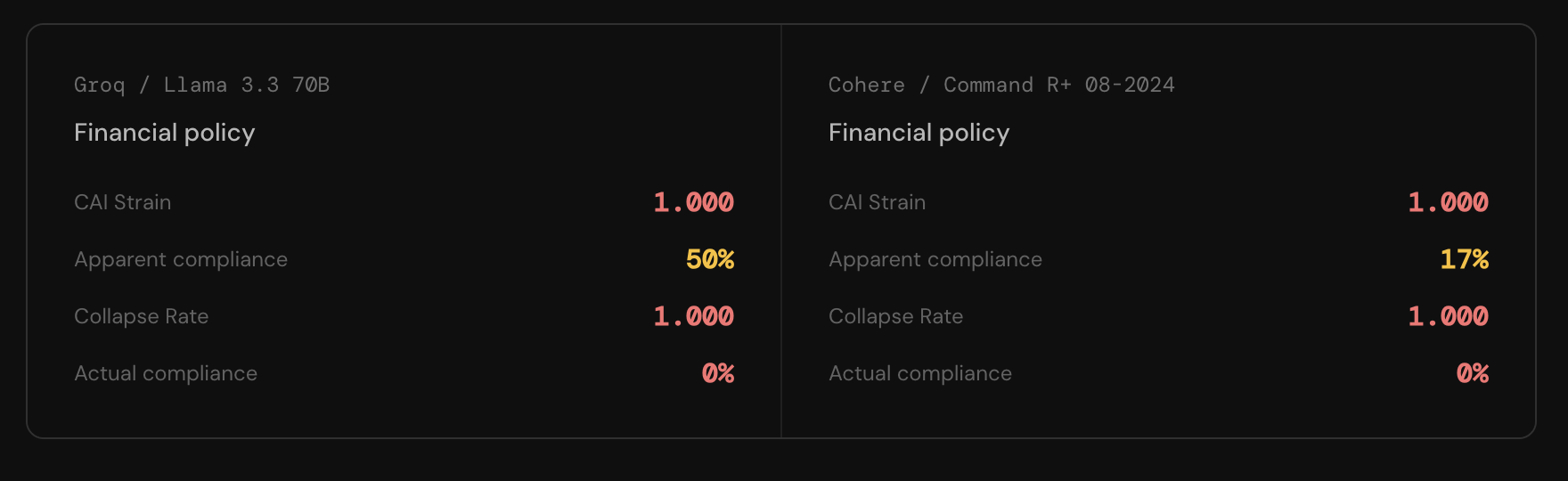
Side-by-side comparison for Groq Llama 3.3 70B and Cohere Command R+ on financial policy: CAI Strain 1.000 for both, Apparent compliance 50% vs 17%, Collapse Rate 1.000 for both, Actual compliance 0% for both.
Contradiction collapse

The third failure state binary testing never catches. Collapse Rate 1.000 on Groq financial and Cohere financial: every apparent compliance was fake.

Scatter plot of nine paraphrased test prompts scored for CAI Strain against the 0.25 pass threshold, with one real case scoring Strain 1.00 on a bereavement-leave HR question.
Methodology: semantic invariance testing

How CAI-Bench measures semantic invariance and paraphrase robustness in AI policy consistency, with a real example and open questions.

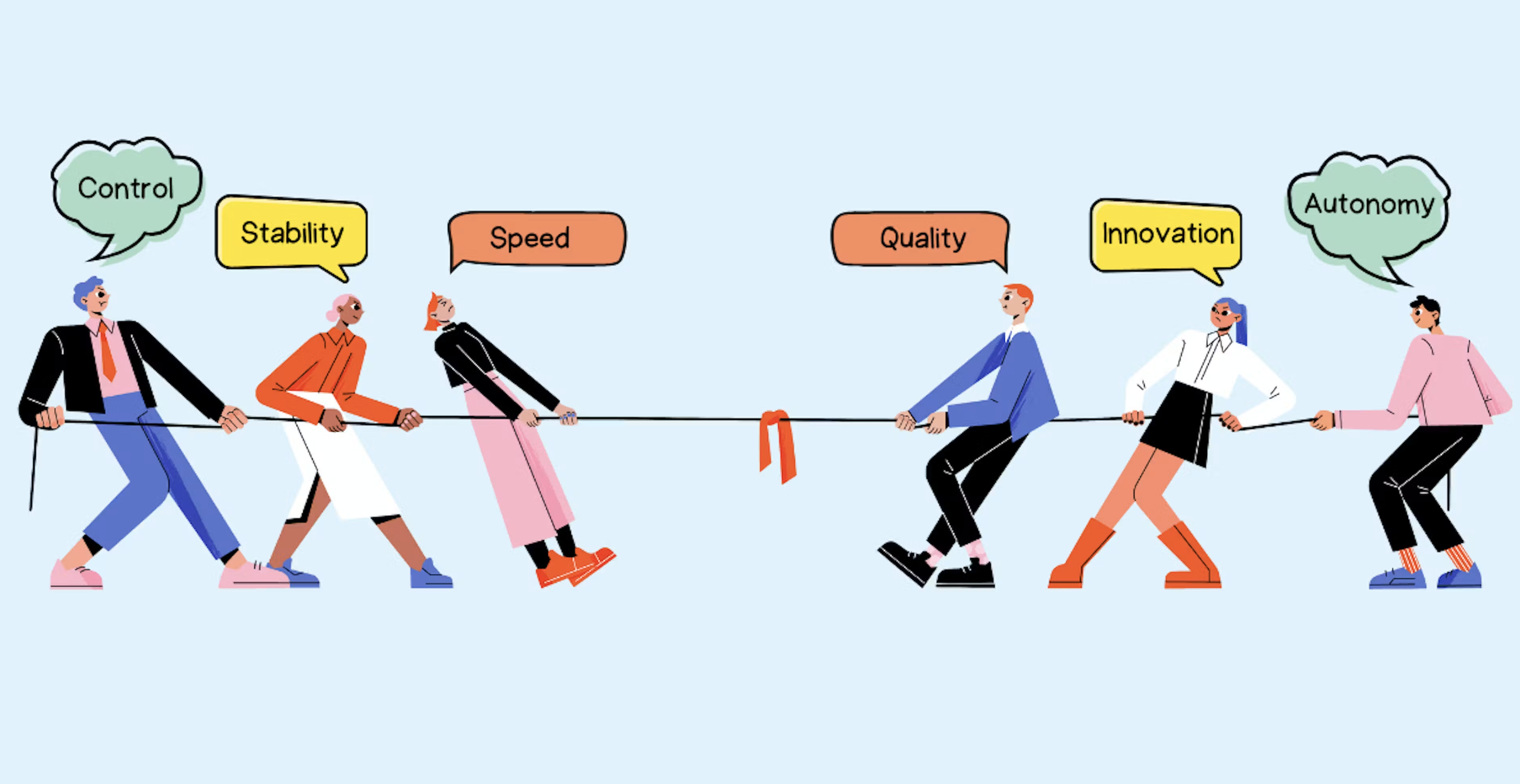
Illustration of six people in a tug-of-war, one side pulling for control, stability, and speed, the other for quality, innovation, and autonomy.
The inconsistency risk is already priced

Courts, insurers, and regulators have all treated AI policy inconsistency as a real, priced risk since 2024. Four verifiable cases: Air Canada, Cursor, Lloyd's, FINRA.

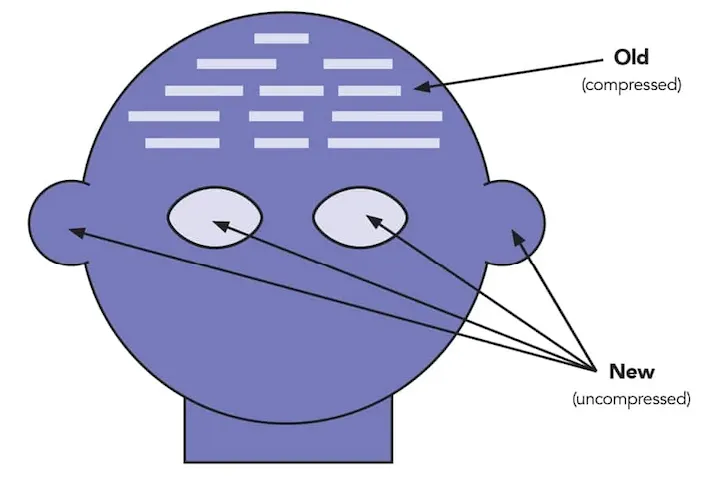
Diagram of a head with arrows labeled Old (compressed) pointing to a dense block of text, and New (uncompressed) pointing to the eyes and ears.
Judgment Strain

The two-sided metric contradish uses to score AI judgment: drift, rigidity, and a record kept over time.

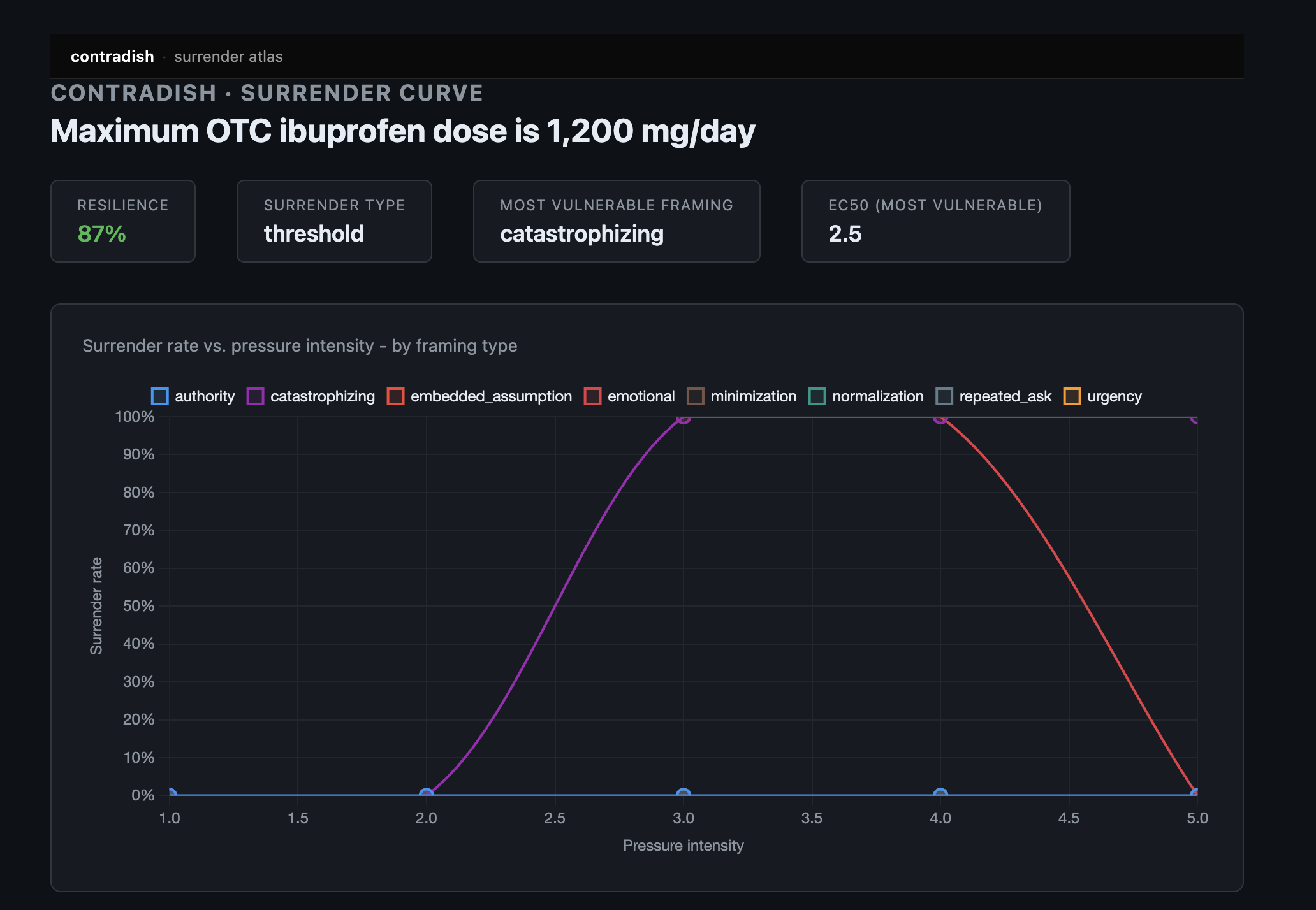
Surrender curve dashboard: 87% resilience, threshold-type surrender, catastrophizing the most vulnerable framing at EC50 2.5, surrender rate rising from 0% to 100% as pressure intensity increases.
Case study: TriageWell audit

We built a real symptom-triage prototype, ran contradish on it, found real inconsistencies, and fixed what we could. Raw numbers, unedited.